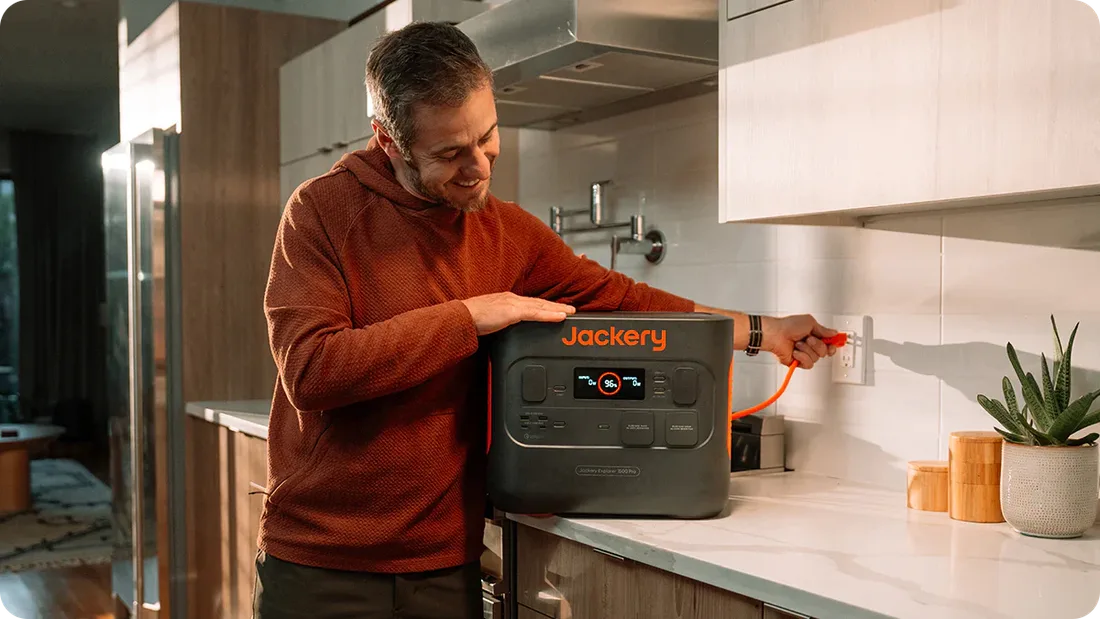
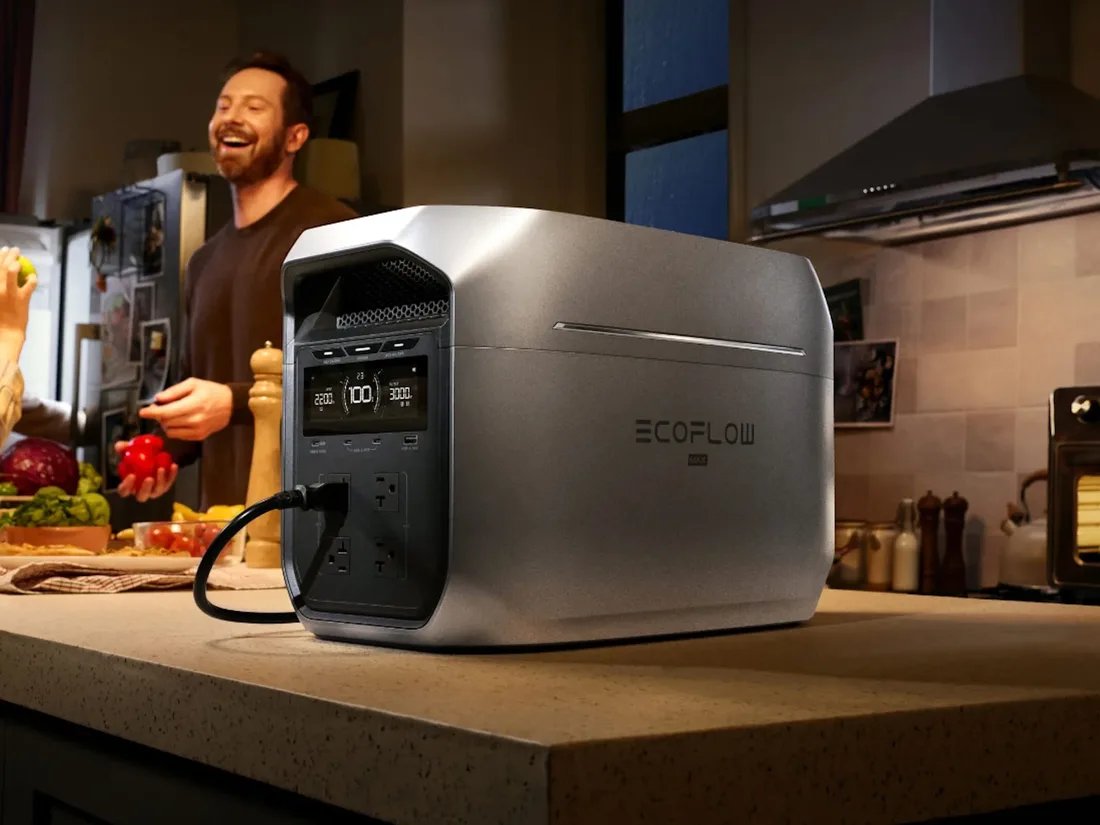
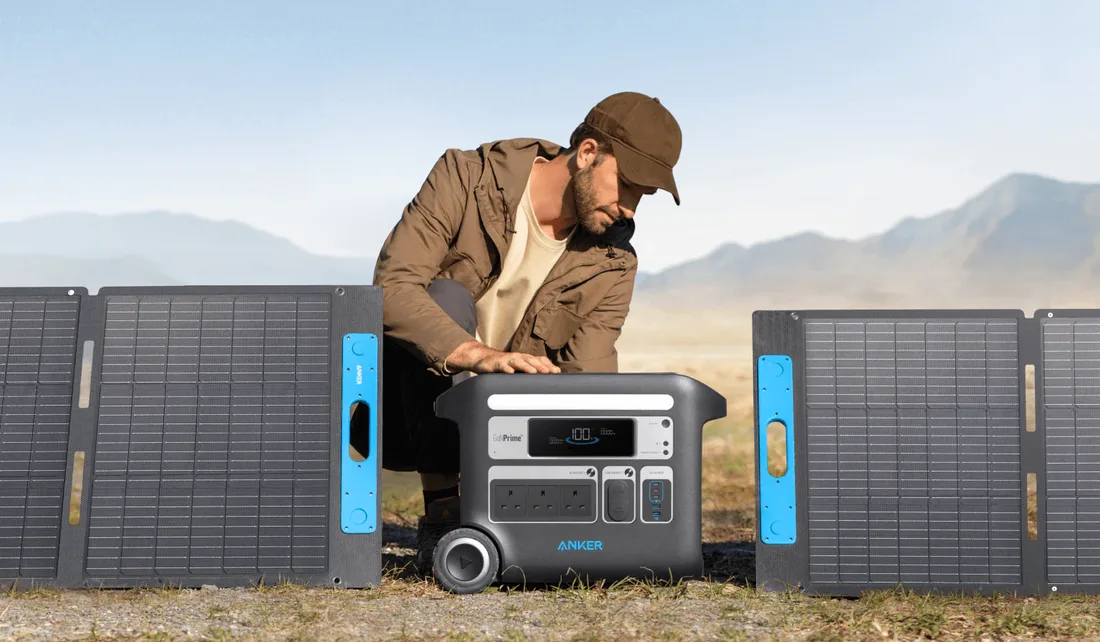
Jackery Solar Generators
Easiest plug-and-play solar power
- Set up in minutes, no app needed
- Best solar bundles for camping & outages
- HomePower series for home backup
Silent, fume-free backup power from the top-rated solar generator brands. Keep your fridge cold, Wi-Fi on and phones charged in an outage, then take it camping on the weekend.
Three brands, three strengths. Tap the one that fits how you live and see the live price on the official store.

Easiest plug-and-play solar power

Smartest app & whole-home ready

Most power for every dollar
A portable power station is a big rechargeable battery with real 120V outlets. Pair it with solar panels and you've got a solar generator that refuels itself for free.
No exhaust and no carbon monoxide, so you can run it in your living room, bedroom, tent or RV.
No engine roar. Sleep next to it, work next to it, and keep the campsite peaceful.
Add folding solar panels and recharge from the sun during long outages or off-grid trips.
No fuel cans in the garage, no stale gas, no pull cords and no tune-ups.
Stable power that's safe for laptops, TVs, medical devices and other sensitive electronics.
LiFePO4 batteries rated for thousands of cycles and backed by long warranties from the brands.
Tap everything you want to keep running for a day. We'll do the math and show you the right size from each brand.
From hurricane season to weekend camping, here's how Americans use solar generators and the size that works best for each.
Hurricanes, ice storms, heat waves and wildfire shutoffs. Keep the fridge, freezer, internet, lights and medical devices running.
Run string lights, a 12V fridge, fans and cameras all weekend. Quiet enough that your neighbors won't even notice.
Boondock longer with solar on the roof and an alternator charger that tops up while you drive. TT-30 ready models available.
Plug in your modem, monitor and laptop. Fast UPS switchover keeps you online when the grid blinks.
Run saws, drills and compressors with high surge output and zero fumes, even inside the garage.
Expandable systems that connect to your home circuits through a transfer switch or smart panel, installed by a licensed electrician.
No installation, no fuel and no learning curve. Most people are up and running the day it arrives.
Plug into a wall outlet, your car or solar panels. Many models refill from the wall in about an hour.
LiFePO4 cells hold their charge for months, so it's ready the moment the lights go out.
Real 120V outlets, USB-C and car ports run everything from phones to fridges to power tools.
The specs that decide what you can run and for how long. Tap any model for today's price.
| Model | Capacity | AC Output | Best For | Price |
|---|---|---|---|---|
| JACKERYSolar Generator 1000 v2 | 1,070Wh | 1,500W | Camping, everyday backup | Get Deal |
| JACKERYSolar Generator 2000 Plus | 2,042Wh (expandable) | 3,000W | RV, outage backup | Get Deal |
| JACKERYHomePower 3600 Plus | 3,584Wh | 3,600W | Essential home circuits | Get Deal |
| ECOFLOWDELTA 3 Plus | 1,024Wh (to 5kWh) | 1,800W | Home office, everyday backup | Get Deal |
| ECOFLOWDELTA Gen4 Series | Multiple sizes | Varies by model | Newest tech, lighter build | Get Deal |
| ECOFLOWDELTA Pro Ultra X | Whole-home, expandable | Whole-home class | Full-house backup | Get Deal |
| ANKERSOLIX C1000 Gen 2 | 1,024Wh | 2,000W | Fast recharge, camping | Get Deal |
| ANKERSOLIX C2000 Gen 2 | 2,048Wh | 2,400W | Fridge + freezer backup | Get Deal |
| ANKERSOLIX F3800 | 3,840Wh (expandable) | 6,000W | Well pumps, 240V loads | Get Deal |
| ANKERSOLIX S5000 | 5,024Wh | 4,500W | Rolling home backup | Get Deal |
Both keep the lights on. Here's the honest difference so you buy the right one.
Storms don't send a warning a week out. Lock in today's price on a Jackery, EcoFlow or Anker power station and be ready.


Quick, plain-English answers on solar generators, portable power stations and portable generators. Open any topic.
A portable power station is a large rechargeable battery with a built-in inverter, charge controller and a panel of outlets: standard 120V AC sockets, USB-C ports that can fast-charge a laptop, USB-A, a 12V car socket and often a TT-30 RV outlet. You charge it from the wall, your car or solar panels, then run your gear from it. No engine, no fuel and no exhaust.
A solar generator is the same battery sold as a bundle with one or more folding solar panels, so you have everything you need to recharge off the grid in one box. Jackery made the term popular. If you already own panels, or you'll only charge from the wall, you can buy the station alone and keep the panel money.
A traditional portable generator burns gas, propane or both to spin an alternator. It's still common for long outages because you can keep refueling it. Today many shoppers search "portable generator" when they want a battery unit, and brands like Anker call their big SOLIX models home backup generators. On this page, Anker portable generators means their battery-based SOLIX power stations.
Two numbers matter most. Capacity, in watt-hours (Wh), is how much energy the battery stores, which decides how long it lasts. Output, in watts (W), is how much power it can deliver at one time, which decides what it can run.
The 0.85 covers the 10 to 15 percent lost to inverter heat. A 2,048Wh unit running a 60W router and a 40W laptop (100W) lasts about 2,048 × 0.85 ÷ 100 = 17 hours.
For output, add up everything running at the same time and keep the total below the rated watts. Motors in fridges, pumps and tools also pull a short surge at startup, often two to three times their running watts, so check the surge or peak rating too. A fridge that runs at 150W can ask for 600W or more for a second.
Older power stations used NMC lithium-ion cells, the same family as laptop batteries. They're lighter, but typically rated for around 500 to 1,000 cycles. Nearly every current model from Jackery, EcoFlow and Anker now uses LiFePO4 (lithium iron phosphate). These cells are heavier for the same capacity but far more stable under heat, and they're commonly rated for 3,000 to 4,000 or more cycles before falling to about 70 to 80 percent of their original capacity.
In plain terms: cycle it once a week and a LiFePO4 unit is built to outlast most of what you plug into it. If you see a low price on an older NMC model, factor the shorter life into whether it's really a deal.
Jackery's whole lineup is built around one idea: open the box, unfold the panel, plug in, done. The screens are clear, no app is needed to start, and the SolarSaga panel bundles are some of the easiest to set up, with built-in kickstands and a single connector.
Choose Jackery if you want the simplest experience, great solar bundles, or a gift for someone who doesn't want to deal with settings and apps.
EcoFlow suits people who like to monitor, tweak and automate. It has the widest lineup of the three, the most mature app and the biggest ecosystem of add-ons, from smart home panels to alternator chargers for vans.
In November 2026 EcoFlow launched the DELTA Gen4 and RIVER Gen4 series in the US, with smaller, lighter enclosures and lower standby drain so the battery holds charge longer in storage. The lineup includes bigger models such as the DELTA 3800 Gen4. A new generation also tends to push prices down on the outgoing DELTA 3 and RIVER 3 units, which are still excellent.
Anker brings its charger-maker engineering to big batteries, and the SOLIX line often delivers more watts and watt-hours per dollar than rivals. If your priority is raw power for heavy appliances, Anker is a strong pick.
A panel's rated watts are its output in ideal lab conditions. Across most of the continental US, plan on roughly rated watts × 3 to 5 peak sun hours per day, then trim for clouds, angle and heat.
One 200W panel with 4 peak sun hours gives about 600Wh a day, enough to refill a 500Wh unit or run a fridge for much of the day. Two 200W panels get you close to refilling a 1kWh station on a clear day.
Folding portable panels are best for camping and storage. Rigid panels cost less per watt and suit permanent roof mounts on RVs, sheds and cabins. Bifacial panels catch reflected light and can add output over snow, sand or light surfaces. Aim panels straight at the sun, avoid even partial shade, keep them clean, and match them to your station's solar input voltage and connector.
The type of outage you're most likely to face changes what you should buy. Think about the risks where you live, not just the biggest battery on sale.
Gulf Coast and Southeast (hurricanes): outages after a major storm can last days or even weeks, and it's hot. Food safety and cooling are the big concerns. A 2kWh to 3.6kWh unit with solar panels lets you keep a fridge running and recharge every sunny afternoon once the storm passes. Charge it fully as soon as a storm enters the forecast cone.
Northeast and Midwest (ice storms and blizzards): cold weather is hard on batteries and short winter days mean less solar. Size up on capacity, keep the unit indoors where it's warm, and focus on the furnace blower fan, internet, lights and the sump pump. Many gas furnaces only need a few hundred watts for the blower and controls, but have an electrician confirm how to connect safely.
California and the West (wildfire shutoffs and heat): Public Safety Power Shutoffs are often announced a day or two in advance, which gives you time to charge. Lots of sun makes solar recharging very effective here, and running fume-free indoors matters when the air outside is smoky.
Texas and the South Central states (grid strain): extreme heat and cold can both push the grid to rolling outages. A mid-size unit with fast UPS switchover keeps fridges, fans and Wi-Fi running through short, repeated blackouts.
Wherever you are, keep a short list of your must-run devices taped near the unit, store your extension cords with it, and test the whole setup once each season.
These are rough runtimes using the 85 percent rule. Your results depend on the specific appliance, room temperature and how often motors cycle on.
Heating and cooling are the big battery killers. A 1,500W space heater empties a 2kWh unit in a little over an hour, so in winter it's smarter to power a heated blanket (often 50 to 100W) than to heat the whole room.
For many people, keeping a CPAP running during an outage is the main reason to buy a power station. Most CPAP machines draw roughly 30 to 60 watts without the heated humidifier and heated tube. Turn those on and the draw can jump to well over 100 watts.
Tips to stretch your runtime: use a DC power cord made for your machine when one is available, since it skips the inverter and wastes less energy; turn off the humidifier and heated hose during outages if your doctor says that's fine; and pick a unit with UPS switchover so the machine keeps running if the grid drops while you sleep.
A 500Wh to 1,000Wh unit typically covers one to three nights. Campers who use a CPAP often pair a 1kWh unit with a single 200W panel to refill during the day. Always confirm power requirements with your device maker or doctor, and keep a backup plan for anything you depend on medically.
A portable power station can replace or support the house battery in a camper van, trailer or small RV, with no permanent wiring required. Look for a TT-30 outlet if you want to plug the RV's shore cord straight into the unit, and check that the continuous output can handle your rooftop AC if you plan to run it (most 13,500 BTU units need around 1,300 to 1,800 watts running, with a higher surge).
Charging on the move is the game changer. EcoFlow's alternator charger can push large amounts of power into the battery while you drive, and every brand supports 12V car charging at a lower rate. Rooftop or ground-deployed solar handles the rest. Many full-time van-lifers run a 2kWh unit with 400W or more of solar and rarely need a campground hookup.
For boats, keep the unit dry and secured, use marine-rated cables, and remember that most power stations are not waterproof even if they're splash resistant.
There are three common ways to use a power station for home backup, from simplest to most seamless.
1. Extension cords: the easiest option. Run heavy-duty cords from the unit to the fridge, a lamp and your router. No installation needed, and it works with any power station.
2. Manual transfer switch: an electrician installs a small panel next to your main breaker box, wired to a handful of essential circuits such as the fridge, furnace blower, well pump and some lights. In an outage you plug the power station in and flip the switches. No cords running through the house.
3. Smart home panel: brands such as EcoFlow, Jackery and Anker offer smart panels or home backup systems that switch over automatically and let you manage circuits from an app. This is the most convenient setup, and it pairs best with large expandable units like the Explorer 5000 Plus, DELTA Pro Ultra X, F3800 or S5000.
Never plug a generator or power station into a wall outlet to "backfeed" your house. It's illegal in most places and can electrocute utility line workers. Any connection to your home's wiring should be done by a licensed electrician following local code.
A big battery stores a lot of energy, so buying from an established brand matters. Look for recognized safety certifications on the product page. For example, Anker lists UL9540 and UL9540A certification for the SOLIX S5000, standards used for energy storage systems. Built-in battery management systems on major brands monitor temperature, voltage and current to shut the unit down safely if something goes wrong.
Warranty coverage on current flagship models from all three brands is commonly five years, but it can vary by model and by where you buy. Buying from the official brand store, or an authorized retailer, keeps warranty claims straightforward. Check the return window too, and test your unit soon after it arrives.
Basic safe use: keep the unit on a flat, dry, ventilated surface; don't cover the vents; keep it away from water and heat sources; use cords rated for the load; and don't open or modify the battery.
LiFePO4 batteries can discharge in the cold, but most should not be charged below freezing unless the unit has a built-in battery heater. Check your model's charging temperature range before winter. Keep the unit inside the warm part of the house, not in an unheated garage, and bring it in from the car overnight on winter camping trips.
Expect less runtime in the cold, since battery chemistry slows down as temperatures drop. Solar output also falls on short winter days, though panels themselves work more efficiently when it's cool and the sun is out. Snow on the ground can even reflect extra light onto bifacial panels. Plan on more capacity, more panel wattage, or both, if you live where winter outages are common.
To stay warm without draining the battery, power low-wattage heat sources such as heated blankets, heated mattress pads or the blower fan on a gas furnace instead of an electric space heater.
New current models give you the latest features, the longest warranty and the best resale value. If you're buying for the next ten years, this is the safest choice.
Last-generation models are often the sweet spot for value. With EcoFlow's DELTA Gen4 and RIVER Gen4 launching in November 2026, DELTA 3 and RIVER 3 units are still very capable, still use LiFePO4 cells, and tend to see deeper price cuts. Make sure the model you pick still gets app and firmware support.
Brand-certified refurbished units, sold directly by Jackery, EcoFlow or Anker, are inspected and usually come with a warranty, though often shorter than new. They can be a smart way to get a bigger battery on a tight budget. Avoid used units from unknown sellers, since you can't confirm how the battery was treated.
Think about what an outage actually costs you. A full fridge and freezer of food can easily be worth several hundred dollars. A missed workday, a flooded basement from a dead sump pump, or a night in a hotel adds up fast. A power station that prevents even one of those losses goes a long way toward paying for itself.
Then add the everyday uses: camping trips, tailgates, backyard movie nights, power for the shed or workshop, and a backup battery for your home office. Because LiFePO4 batteries last thousands of cycles and need no maintenance, the cost per use drops every year you own it. Compared with a gas generator, you also save on fuel, oil and tune-ups.
Mostly, yes. A portable power station is the battery unit with an inverter and outlets. A solar generator is that same unit sold together with solar panels so you can recharge it from the sun.
A typical modern full-size fridge uses roughly 1 to 2 kWh per day and pulls a short startup surge several times its running watts. For a full day of fridge backup, pick a unit with at least 2,000Wh of capacity and 1,800W or more of continuous output.
Yes. Battery power stations make no exhaust, so they are safe to run inside your home, tent or RV. Gas portable generators produce carbon monoxide and must only be run outdoors, far from doors, windows and vents.
Most current Jackery, EcoFlow and Anker models use LiFePO4 cells rated for around 3,000 to 4,000 full cycles before dropping to about 70 to 80 percent capacity. At one cycle a week that is decades of use.
Jackery is the simplest and best for plug-and-play solar kits, EcoFlow has the widest lineup and the deepest app and home-integration features, and Anker SOLIX often gives the most watts and watt-hours per dollar.
Many current models recharge from a wall outlet in about one to two hours. Solar charging depends on panel wattage and sunlight; a 400W panel setup can refill a 1kWh unit in roughly three to four good sun hours.
Large expandable systems such as the Jackery Explorer 5000 Plus, EcoFlow DELTA Pro Ultra X and Anker SOLIX F3800 or S5000 can back up essential home circuits through a transfer switch or smart panel installed by a licensed electrician. Central AC and electric heat usually need even more capacity.
No. You can charge from a wall outlet or car. Solar panels let you recharge during multi-day outages and off-grid trips, which is why solar generator bundles are popular.
Practical tips on portable power stations, solar charging, outage prep and getting the most from your battery.
Capacity, output, surge and expandability explained in plain English, so you buy the right size for your fridge, Wi-Fi and lights the first time.
Read More →Noise, fumes, fuel, cost and runtime compared side by side, plus why many families now pair a battery with a small gas unit.
Read More →Real runtime math for 1kWh, 2kWh and 3.6kWh units, how startup surge works, and simple tricks to keep food cold for longer.
Read More →How many watts of solar you really need, portable vs rigid panels, and how to recharge your power station off the grid.
Read More →What to charge, what to plug in first and how to keep medical devices, phones and the fridge running when the grid goes down.
Read More →Cycle life, safety, weight and cold-weather performance, and why most new solar generators now use LiFePO4 cells.
Read More →